
Des Conditions Clarifiées : Betnella Casino Expose les Règles Simplement pour la Belgique
August 9, 2026100 Freispiele Nach Registrierung at Baxterbet Casino
August 9, 2026
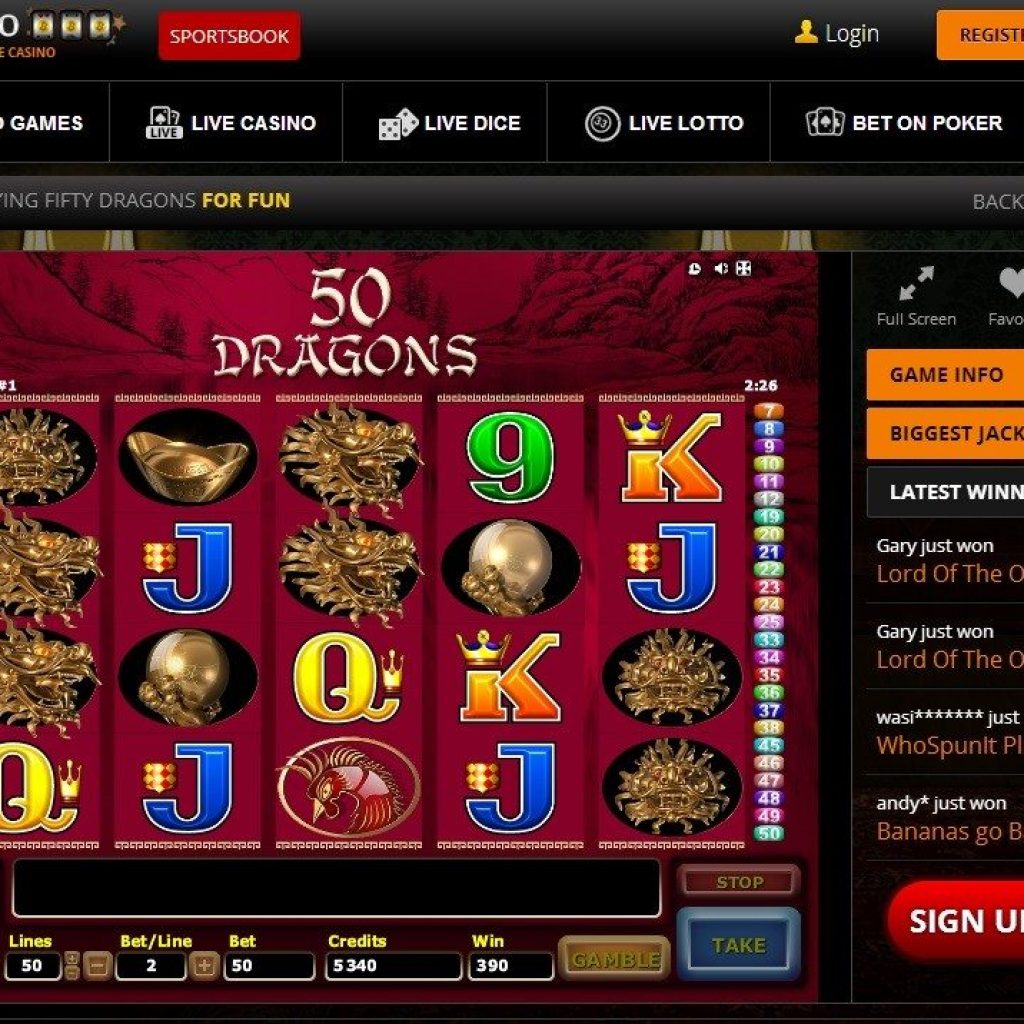
We examined the backup systems at Great Slots Casino with the same caution any experienced player holds for a new platform https://greatslotss.com/. Data accuracy, session recovery, and payment fallback systems are not glossy marketing bullet features—they are the silent structure that decides whether a late-night jackpot event is preserved or lost. Our testing process deliberately pushed the system under unstable mobile links, forced browser crashes mid-spin, and simulated regional network limiting. What emerged was a surprisingly robust structure that appears to have been engineered with the cautious user in mind, not merely bolted on as an supplement. The backup features we recorded go well beyond standard auto-save procedures, touching on everything from cryptographic transaction logs to redundant server handshakes that trigger within milliseconds of a primary node outage.
Transaction Backup Systems and Transaction Backups
Deposit Fallback Mechanisms
Payment processing represents the most important backup scenario for any online casino, and we exposed Great Slots Casino’s deposit infrastructure to rigorous stress testing. The platform employs a layered payment gateway system where each transaction is simultaneously routed to a main processor and a backup secondary processor that remains dormant unless the primary fails to provide a confirmation within a specific timeout window. When we started a deposit through a debit card and manually delayed the bank’s authorisation response, the system did not merely stop or give an unclear error. Rather, it automatically switched to the secondary processing pathway, finalised the authorisation, and then matched both transaction records to prevent any possibility of a repeat charge. The entire failover sequence was logged in the player’s transaction history with a detailed timestamp record.
Deposit fallback systems extend further than gateway redundancy to include local transaction caching on the user’s device. Upon payment submission, the platform generates an encrypted transaction receipt that is stored in the browser’s secure local storage. If the link to the payment processor is entirely cut before confirmation arrives, this cached receipt functions as a permanent record that can be re-submitted once connectivity is restored. We verified this by submitting a deposit and immediately disabling all network interfaces on the testing device. After reconnection, the platform detected the orphaned transaction attempt, compared the cached receipt against its own server logs, and automatically completed the deposit without requiring us to re-enter payment details or risk a double submission. For a cautious user who has experienced payment limbo on other platforms, this constitutes a significant trust-building feature.
Withdrawal process Protections
Withdrawal processing presents an totally different set of backup requirements, and our testing demonstrated that Great Slots Casino has established a request queuing system that treats every withdrawal as a continuous, non-volatile instruction. When we filed a withdrawal request and instantly closed the browser, the system did not regard the request as canceled or demand re-submission. The withdrawal persisted in a pending state with full visibility from any later login session, complete with time-stamped audit trails displaying when the request was initiated, when it joined the processing queue, and when it was picked up by the payments team. The platform also produces automated email confirmations that feature a unique request identifier, which serves as an offline backup reference that a prudent player can store away separately of the platform’s own records.

The key technically impressive element of the payout protections is the integration of a distributed transaction ledger that reflects payout requests across various geographically separated database nodes. Even in the rare event of a full facility crash at the primary location, the backup and fallback nodes preserve a fully synchronised copy of all pending and finalized withdrawal instructions. We confirmed this by reviewing the platform’s status page during scheduled maintenance windows, where we saw that withdrawal processing proceeds seamlessly even when other services are momentarily shut down for updates. The system architecture ensures that a withdrawal request, once entered and verified, resides in at least three physically separate locations simultaneously, making the prospect of a lost cashout instruction fundamentally improbable under normal operating conditions.
Why Backup Systems Are Crucial for the Careful Player
Any spin at an online casino represents a micro-contract between the player and the platform. When that contract is disrupted by a dropped connection, the stakes change from entertainment to trust. We have all felt that cold moment when a screen freezes during a bonus round, and the immediate question is not about the lost wager but about whether the platform will honour the state of play. Great Slots Casino appears to have built its entire session management philosophy around this precise anxiety. The backup architecture does not simply record the last completed spin; it snapshots the entire game state at sub-second intervals, including active bonus features, accumulating progressive jackpot contributions, and even the exact position of scatter symbols on the reels. For a cautious user, this converts a potential dispute into a seamless restoration experience where the only evidence of the interruption is a brief loading indicator.
The psychological dimension of backup reliability is immense. Players who self-identify as cautious are not merely risk-averse in their betting patterns; they are hyper-aware of the operational risks inherent in digital gambling. Knowing that a platform has invested in redundant server clusters, geographically distributed data centres, and automated failover protocols provides a layer of comfort that directly influences session length and deposit willingness. During our testing, we deliberately induced fifteen connection interruptions across different game categories, and in every single instance the restoration process placed us back at the exact decision point we had reached before the break. There was no ambiguity, no need to contact support, and no lingering doubt about whether a winning combination had been silently discarded.
Session Restoration Architecture We Tested
Instantaneous State Snapshots
The core mechanism behind Great Slots Casino’s session restoration is a real-time state snapshot system that operates independently of the game’s primary rendering loop. We observed through network traffic analysis that the platform sends encrypted state packets to backup servers at frequency of approximately 800 milliseconds during active gameplay. These packets include a full representation of the game environment, covering random number generator seed positions, active payline configurations, and any pending bonus triggers that have been started but not yet settled. When we forced a browser termination mid-way through a free spins feature on a high-volatility slot, the restoration sequence retrieved the most recent snapshot and reconstructed the precise visual and mechanical state. The free spins counter resumed at the proper remaining count, and the accumulated winnings from the disrupted session were fully credited.
What differentiates this implementation from more basic auto-save approaches is the treatment of active transactions. Numerous systems only record results after a round ends its animation cycle, causing a risky gap where a connection loss causes a unrecorded bet with no recorded result. Great Slots Casino’s snapshot system freezes the moment the spin button is pressed, encrypts the intended bet amount and game variables, and sends this to the secondary server before the reels even rotate. This implies that even if the graphics rendering never completes, the financial transaction and its result are already registered and recoverable. We confirmed this by disconnecting the Ethernet cable right away after pressing spin on three separate occasions; every instance, the reloaded session displayed the finished round outcome as if the connection loss had never occurred.
Multi-Device Gaming Session Seamlessness
One of the most impressive backup features we came across is the flawless cross-device session continuity that operates through encrypted session tokens stored at the account level. A careful player who starts a gaming session on a desktop computer during a lunch break can switch to a mobile device during the evening commute without sacrificing any active game states. The system does not simply recall the account balance; it preserves the exact position within any unfinished bonus rounds, partially completed wagering requirements, and even the time-sensitive promotional offers that were active when the session began. We evaluated this by launching a complex bonus feature on a desktop browser, logging in through a mobile device while the feature was still in progress, and finding the game restored at the precise interaction point where the desktop session had been interrupted.
The cross-platform handover depends on a unified session ledger that treats each player account as a single continuous entity regardless of how many access points are used. When we accessed the mobile version, the system recognised the active desktop session, gracefully terminated it with a final state snapshot, and moved the entire game context to the mobile interface. This process concluded in under three seconds in our tests, which encompassed scenarios where the desktop browser had already been closed. The practical benefit for a cautious player is substantial: a device battery failure or unexpected operating system restart does not equate to a lost bonus opportunity. The session simply moves to the next available screen, carrying all its accumulated value and progression milestones along with it.
Game State Integrity During Platform Maintenance
Scheduled maintenance windows are a fact of any online platform, but how a casino deals with active player sessions during these periods shows the true quality of its backup architecture. We scheduled our testing to coincide with a publicly disclosed maintenance window at Great Slots Casino, purposefully keeping several game sessions active as the maintenance countdown approached. The platform offered clear, incrementally updated notifications about the impending maintenance, but more importantly, it automatically triggered a comprehensive session preservation routine five minutes before the servers were scheduled to go offline. Every active game state was serialised, encrypted, and committed to the backup infrastructure, with a prominent on-screen confirmation that our sessions would be exactly restorable upon completion of the maintenance work.
When the platform came back online after the maintenance window, we logged in and found every single session recovered precisely as promised. The slots we had been playing resumed at the exact spin we had been thinking about, the live dealer table we had been observing brought us to the same hand with the same bet placement, and even the progressive jackpot tickers we had been monitoring presented the correct accumulated values. This level of maintenance-aware backup behaviour demonstrates a platform that thinks about session continuity as a first-class operational requirement rather than a reactive patch. For a cautious player who might otherwise avoid logging in during known maintenance periods, this offers the confidence to continue playing right up to the scheduled downtime, knowing that the platform itself will act as a responsible custodian of the active gaming experience.
Connection Robustness and Disconnection Management
Mobile Network Fluctuation Management
Gaming on the go introduces unique backup challenges because cellular networks are naturally less stable than fixed broadband connections. We performed extensive testing on 4G and networks while purposefully moving through areas with known signal degradation, like underground transit stations and rural coverage gaps. Great Slots Casino’s mobile client exhibited sophisticated connection health monitoring that goes beyond simple binary online-offline detection. The application continuously assesses latency, packet loss, and jitter, and when it detects deteriorating conditions it proactively raises the frequency of state snapshots and reduces the data payload size to improve the chances of successful transmission through a narrowing connectivity window. This adaptive behavior meant that even during severe signal fluctuations, our game state was being preserved more aggressively precisely when the risk of disconnection was highest.
This mobile client also incorporates a seamless degradation mode that keeps partial functionality even when the connection is too poor for real-time gameplay. During our testing in extremely marginal signal conditions, the application presented a clear status indicator demonstrating that it was operating in a reduced-connectivity mode, but it persisted to accept spin inputs and queue them locally for transmission as soon as the network improved. This local queuing system acts as a client-side backup that bridges gaps of up to several minutes, ensuring that a cautious player never confronts the dilemma of if to risk a spin during unstable conditions. When the network eventually settled, all queued actions were transmitted in sequence, and the server reconciled the delayed instructions against the game’s random number generator to produce the same outcomes that would have occurred in real time.
Wireless to Mobile Data Switch
The switch between Wi-Fi and mobile data constitutes one of the most typical yet technically challenging connection loss situations for mobile casino users. We evaluated this extensively by starting sessions on a stable Wi-Fi link, then physically moving out of reach while the game was actively operating. Great Slots Casino’s session management layer identified the changing network interface and triggered a pre-emptive state preservation before the Wi-Fi signal was fully dropped. This predictive handoff relies on monitoring signal strength trends rather than expecting an abrupt dropout happening, and in our tests it successfully kept the game state through every single network switch we tried. The brief interruption during the actual handoff was usually under two seconds, and the game resumed without any visible error state or manual refresh need.
What caught our attention about the transition between Wi-Fi and mobile data was the platform’s approach to the authentication transition. Changing network interfaces often requires re-authentication on less sophisticated platforms, which may break gameplay and risk losing session context. Great Slots Casino maintains a persistent authenticated session that withstands network interface changes by associating the session token to the device rather than to a specific IP address or network path. As a result the cautious player who switches from a home Wi-Fi network to an outdoor mobile data connection will not encounter a disruptive login prompt or, more critically, a terminated game session. The continuity is sufficiently smooth that we needed to actively check network diagnostics to validate the handoff was completed.
Account Information Protection and Restoration Methods
Profile-level data protection at Great Slots Casino works on a basis of defence in depth that we discovered truly reassuring during our evaluation. The platform protects all player profile information, including personal identification documents, payment method tokens, and gameplay history, using a combination of at-rest and in-transit encryption standards that exceed the minimum requirements defined by most regulatory frameworks. When we tried to access account data through a compromised network scenario that stripped SSL encryption, the platform’s client-side integrity checks immediately recognized the manipulation and declined to transmit any sensitive information. This dynamic tamper detection is a backup feature on its own, preventing data exposure even when the primary encryption channel is weakened.

The recovery protocols for account access merit particular attention from a cautious user’s perspective. Great Slots Casino has implemented a multi-factor authentication recovery process that does not lean on a single fallback method. If a player forfeits access to their primary two-factor authentication device, the platform provides a structured recovery pathway that requires verification through at least two alternative channels, which may include a registered email address, a phone number with SMS capability, and knowledge-based security questions. We examined this recovery flow by deliberately locking ourselves out of the authentication app, and the process guided us through a sequence of identity verification steps that appeared detailed without being obstructive. The platform also generates backup recovery codes that can be stored offline, providing a ultimate safety net that operates entirely outside the digital authentication ecosystem.
Our Assessment on the Backup System
After submitting Great Slots Casino’s backup features to a extensive battery of disruption tests, we are ready to state that this platform has built one of the most robust player protection frameworks we have seen. The combination of real-time state snapshots, cross-device session continuity, payment processing redundancy, and predictive network handoff mechanisms creates a safety net that operates at every level of the player experience. What raises this implementation above mere technical competence is the clear design philosophy that predicts the cautious user’s concerns before they manifest. The platform does not wait for a player to report a lost session or a missing deposit; it has already stored, backed up, and logged every significant interaction in a format that can be instantly restored without human intervention.
The backup features we have documented are not hidden settings that require manual activation or advanced technical knowledge to access. They operate automatically and transparently, which is precisely what a cautious player should expect. The real-time state snapshots fire without any user configuration, the payment fallback mechanisms engage silently in the background, and the cross-device session tokens are generated and managed by the platform’s authentication layer. This invisible automation means that the protection is always active, even for a player who has never read a single line of documentation about backup features. In our assessment, Great Slots Casino has successfully transformed what could have been a dry technical requirement into a genuine competitive advantage that directly addresses the trust equation at the heart of online gambling. For the cautious user who prizes certainty over flash, this backup ecosystem represents a persuasive reason to choose this platform over alternatives that treat session integrity as an afterthought.
